KNOWLEDGE
1.4 systems development documentation as a part of the SDLC:
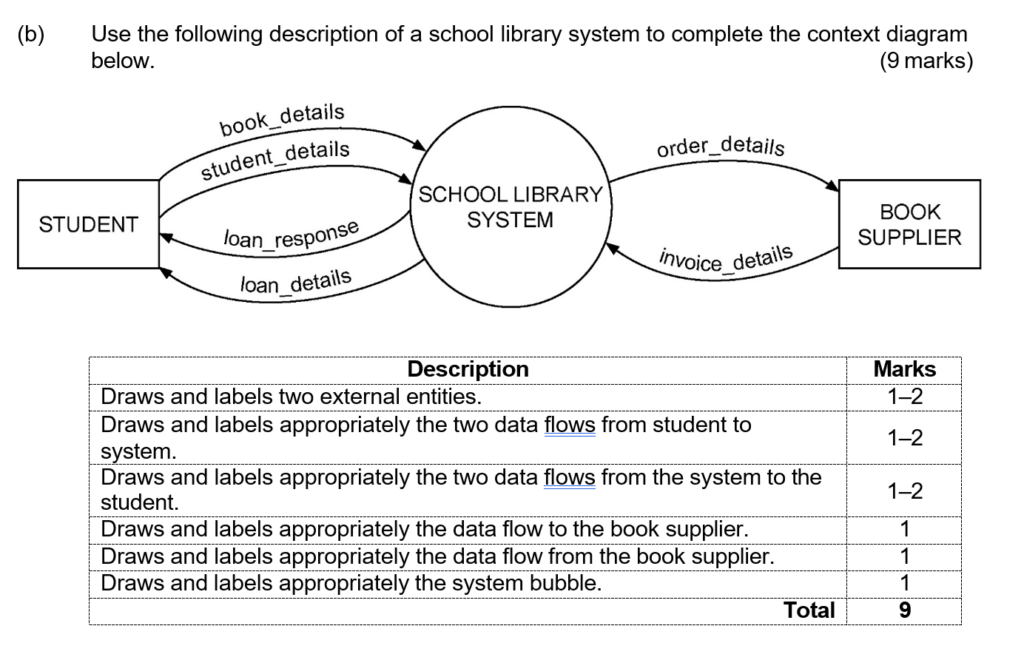
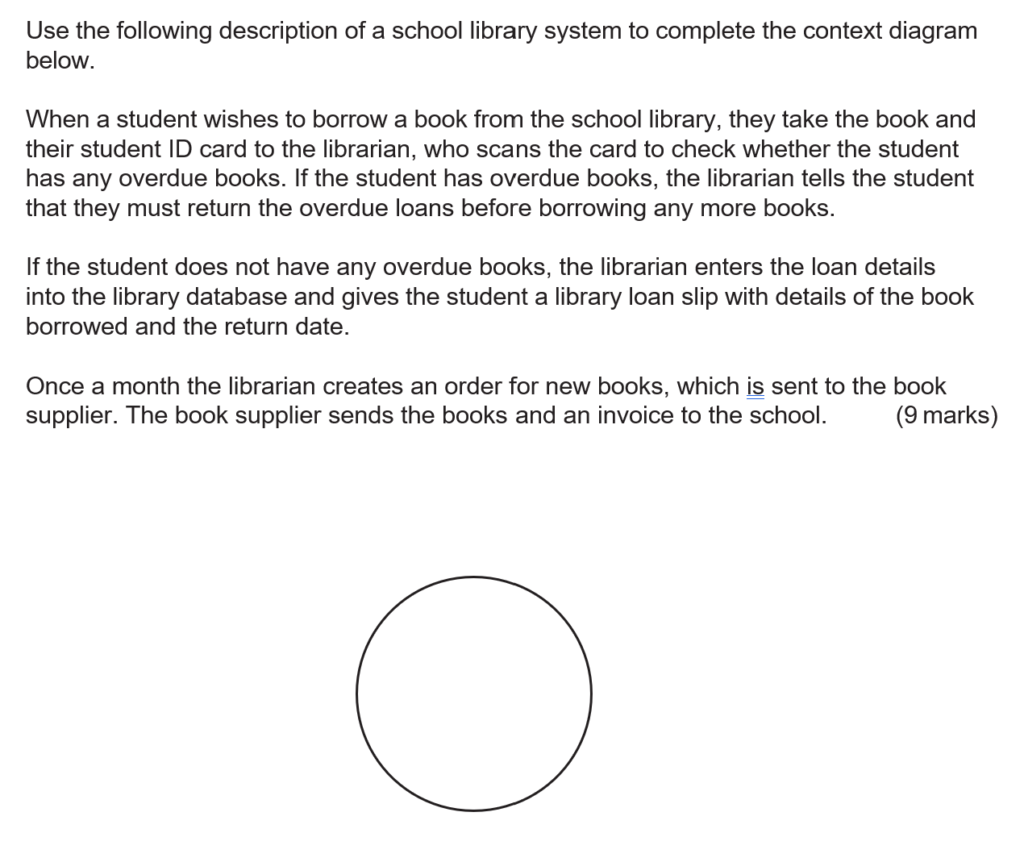
context diagrams using Yourdon/DeMarco notation
#EST 2017 7a: The purpose of a context diagram is to determine the system boundaries.
1.8 appropriate hardware components for a computer system designed for a specific purpose, including:
input, output, processing, storage (primary and secondary)
#EST 2021 2a: Examples of Input/output hardware required:
- Bluetooth wireless microphone and adaptor for computer
- Dedicated video record expansion card or video card with the capability
- Ethernet Network Adaptor Cat-5 hardware to output/transfer video to the streaming server.
#EST 2021 2b: Purpose of input and/or output hardware identified in part (a):
- The college would need to implement a wireless microphone system using Bluetooth technology to record the audio to the computer. This would require a Bluetooth adaptor for the computer.
- To record the video, they would need to install a dedicated video recording expansion card or a high-end video card with recording capability.
- To export the large video files to the streaming server it is recommended that
- Ethernet Network Adaptor using Cat-5 due to distance and available bandwidth to the centralised streaming server, be used.
#EST 2024 Qu1a:
Input
Keyboard: By including a keyboard, students will be able to navigate the system by
pressing a selection of keys. Students will also be able to type using the keyboard
which initiates a series of instructions sent to the CPU resulting in a predicted output.
Output
Monitor: By including a monitor, students will be able to see a visual representation of
the output processed by the computer. With the addition of a monitor, students will be
able to use the devices to see the output of the instructions they request through input
devices.
1.9 the role of the standard operating environment (SOE)
#EST 2024 Q1b:
The IT administration team would benefit from implementing an SOE environment to
ensure the digital environment is configured the same throughout, including the
hardware configurations, software applications and operating system. This solution to
the scenario could be beneficial for both users and administrators as it provides
consistent platform to interact with and can benefit collaborative projects.
1.16 privacy considerations in the development and use of ICT systems
2.3 data protection methods, including:
2.3.1 encryption
2.3.2 authentication
2.3.2.1 passwords
2.3.2.2 biometric
2.3.2.3 digital signature
Describe a data protection method the bank can use to protect a customer’s credit card
data when digitally transferring payment.
Encryption:
– All sensitive data should be encrypted to make sure that, even if intercepted, the details are unreadable.
– This is done by using a mathematical key/formula that is used to change the plain text of the message into cypher text.
#EST 2023 Qu3b
2.3.1 encryption
Describe the role of encryption in data protection.
Encryption is used to deter malicious parties from accessing sensitive data. It protects data confidentially when stored on computer system and when transmitted across computer networks.
#EST 2022 Qu1c
2.3.2 authentication
identify one method of authentication that can be used by the bank.
Users will need to authenticate themselves to the bank based on at least one matching pair of credentials e.g. user name & password, account number & PIN etc.
#EST 2023 Qu3c
2.3.2.1 passwords
Two ways passwords assist to ensure data is protected
– Passwords can be secure, because only the correct user knows it.
– Passwords can be changed regularly to reduce opportunity for guessing and phishing
#EST 2022 Qu1a
2.3.2.2 biometric
2.3.2.3 digital signature
2.6 ethical and legal issues relating to in the personal use and storage of data
2.7 legal requirements and implication of information kept by various organisations about individuals
#EST 2023 Qu3d:
The legal requirements associated with storing sensitive credit card data locally or
through online databases are very onerous and expensive, so most businesses
outsource to their bank for a small fee. This way, no-one in the business knows or
stores the card details, avoiding legal liability and this ignorance protects employees
from potentially using and storing card data in an unethical way.
Ethically/legally any details stored, must ensure authentication strategies (such as two
factor authentication, passwords, biometrics) and encryption is used to keep the data
secure.
2.8 issues related to use of online databases
SKILLS
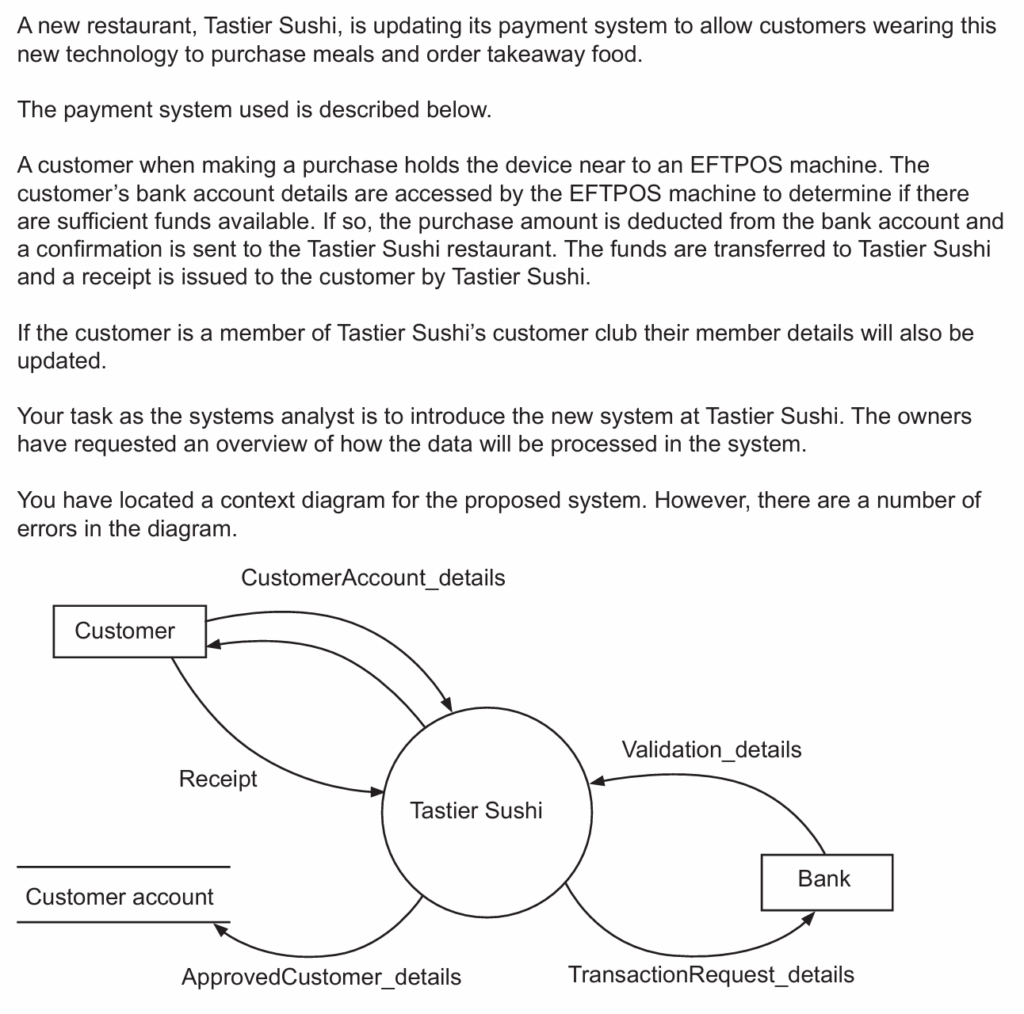
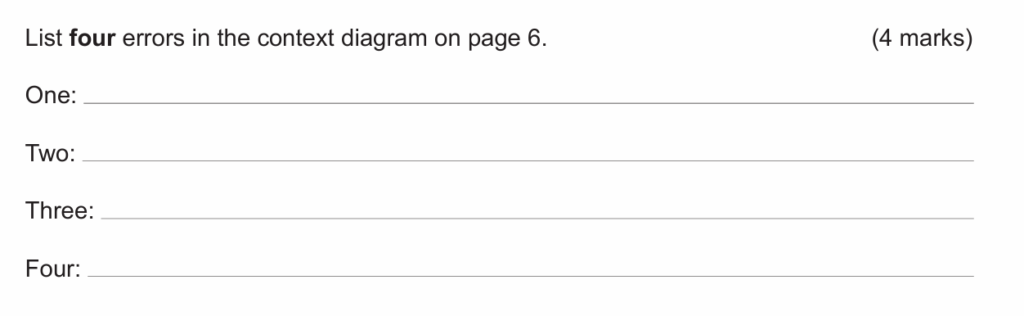
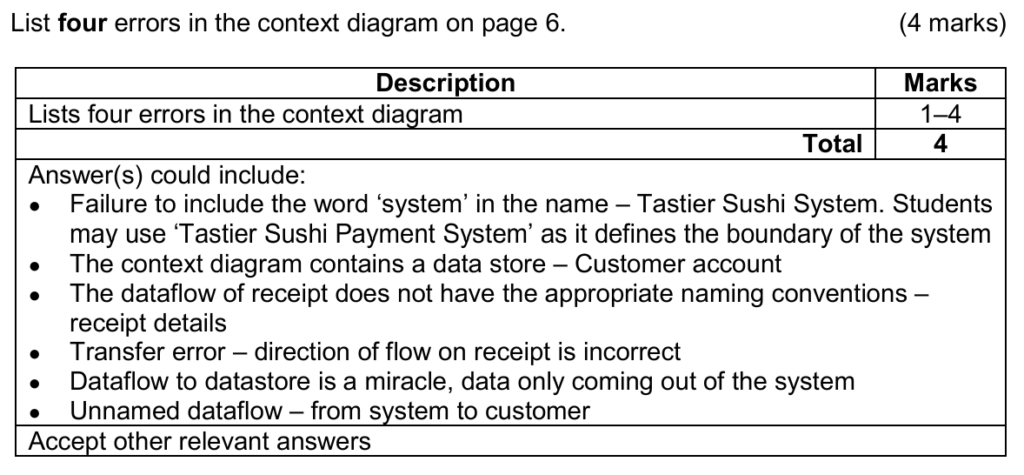
1.18 analyse context diagrams
EST 2019 Qu5a

Answer
1.19 documentan existing system
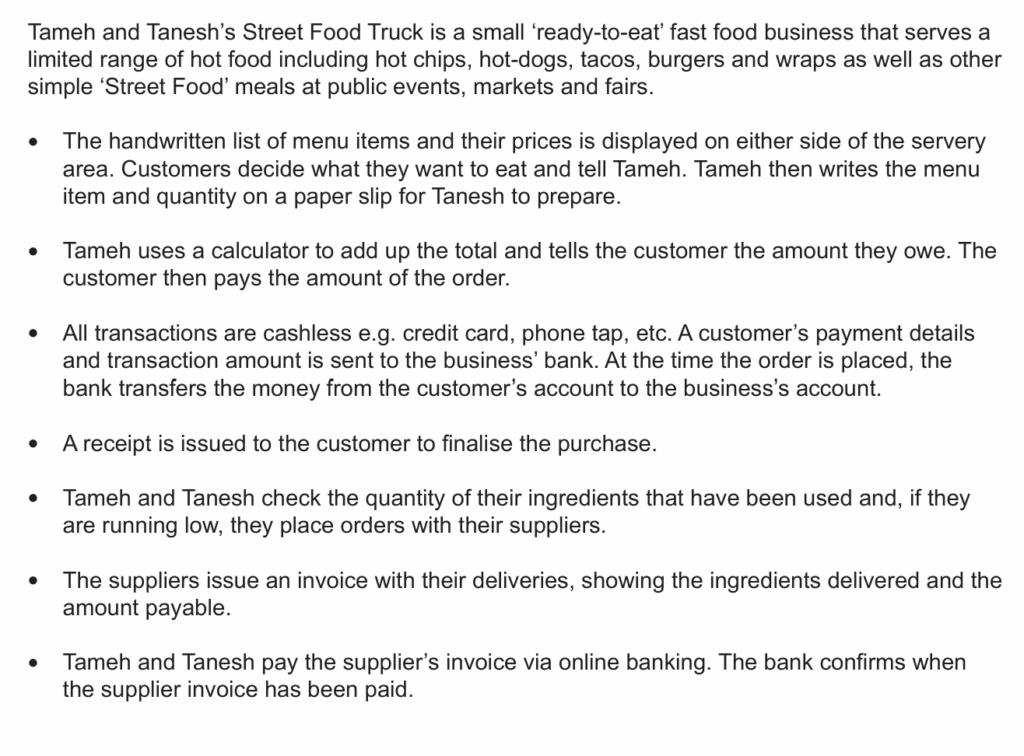
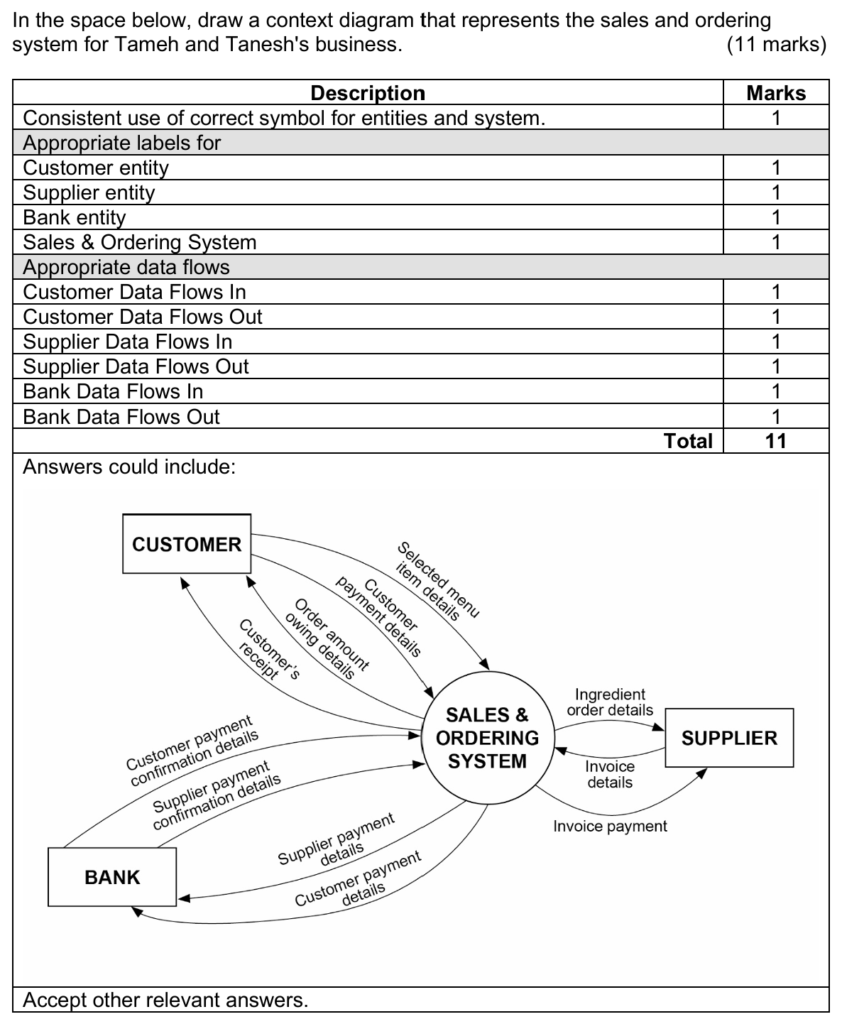
EST 2023 Qu2a

Answer
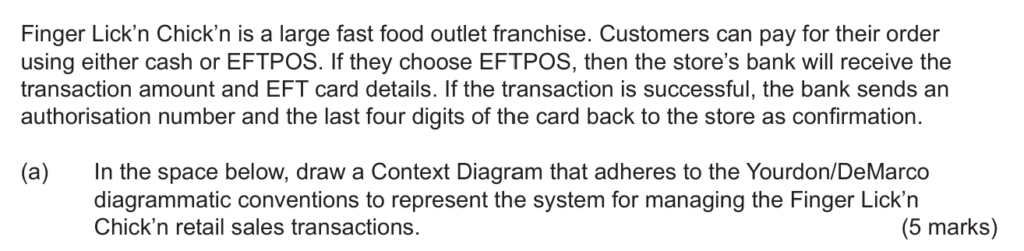
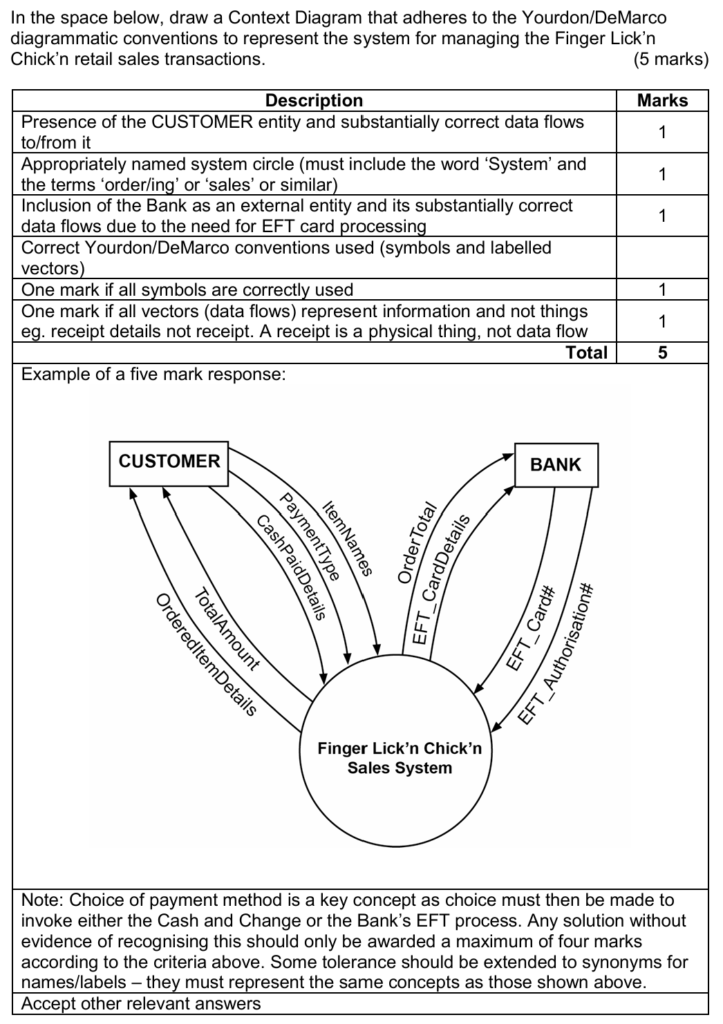
EST 2020 Qu5a
Answer
EST 2017 Qu7b
Answer